
Garage Clearance Without Losing Valuables
Clear Dorset Team
Clear Dorset Clearance Experts
If you have ever opened your garage door, looked at the wall of boxes, tools, furniture, and general accumulation staring back at you, and thought "I will deal with that another day" — you are not alone. Garages across Dorset are some of the most densely packed spaces we encounter in our work at Clear Dorset. Many have not been properly sorted through in decades. What begins as a practical storage area gradually becomes a repository for everything that does not have a home inside the house — and before you know it, the car has not been parked inside for fifteen years and the thought of clearing the space feels completely overwhelming.
But here is the thing that most people do not realise: garages, sheds, workshops, and outbuildings frequently contain items of genuine financial value that get thrown away simply because nobody took the time to look properly. A methodical approach before the skip arrives can save you hundreds of pounds — and in some cases, the valuable items hidden among the accumulation can offset a significant portion or even the entire cost of a professional clearance. This guide explains how to approach a garage clearance in Dorset systematically, what to look for, what common items are worth more than you might expect, and when to call in professional help.
Why Garages Accumulate So Much
Before we get into the practical steps, it is worth understanding why garages become so packed. The pattern is almost universal. Items that are too good to throw away but not needed inside the house get moved to the garage "temporarily." Tools are bought for specific projects and stored afterward. Furniture from redecorations, old appliances replaced by newer models, children's equipment they have outgrown, exercise machines used twice, boxes of inherited items — all of it migrates to the garage because it feels like the least disruptive option.
In Dorset, this tendency is amplified by two factors. First, many properties — particularly in rural areas and older villages — have generous outbuildings that provide almost unlimited storage space, removing any pressure to declutter. Second, Dorset's older population means that many garages we encounter contain accumulations spanning multiple generations. A farmhouse garage near Sturminster Newton might hold tools from the current owner's father, agricultural equipment from a grandfather, and household items from a grandmother — layered on top of each other over sixty or seventy years.
This multi-generational accumulation is precisely what makes Dorset garage clearances so interesting from a valuation perspective. The oldest items, buried at the back and forgotten, are often the most valuable.
Start With a Proper Sorting System
Before you move a single item, set up a sorting system. This is the most important step in the entire process, and skipping it is the single biggest mistake people make. Clear a space in the centre of the garage — or on the driveway if the weather allows — and designate four zones:
- Keep — items you want to retain for personal use or that belong to a specific family member.
- Sell — items that appear to have financial value and should be assessed before being disposed of.
- Donate — items in good, usable condition that could benefit local charities or community organisations.
- Dispose — genuine waste, broken items beyond repair, and materials with no reuse potential.
Use different coloured stickers, tape, or simply mark out areas on the ground with chalk or tape. Work through the garage section by section, starting from the back wall and moving forward toward the door. This prevents the common mistake of pulling everything out at once and creating an unsortable pile on the driveway that you then have to deal with before it rains.
Take your time with each shelf, drawer, toolbox, and cardboard box. The items that have been stored the longest, tucked furthest from the door and buried under other things, are often the ones most likely to hold value. They are also the ones most likely to be thrown away in a rushed clearance because nobody can be bothered to dig that far back.
Resist the urge to throw things straight into bin bags. Once an item is mixed with general rubbish, it is effectively gone — even if it turns out later that it was worth something. If you are unsure about an item, put it in the "sell" zone and discuss it with Clear Dorset during the assessment before committing it to the skip. It is far better to spend five minutes researching an item than to discover you threw away something genuinely valuable.
Tools and Equipment: Where the Hidden Value Lives
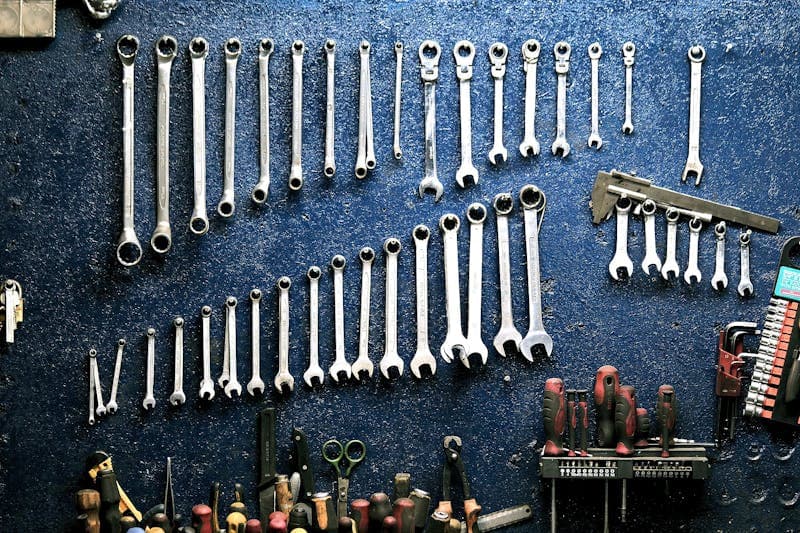
Hand tools are consistently the most undervalued category in garage clearances, and Dorset garages are particularly rich in quality tools because of the county's strong tradition of rural craftsmanship, woodworking, and agricultural self-sufficiency. Older British-made tools from manufacturers like Stanley, Record, Marples, Spear and Jackson, Rabone, and Disston can command surprisingly good prices on specialist online marketplaces and through resale channels.
A well-preserved Stanley No. 4 smoothing plane, for instance, can fetch a good price from collectors and working craftspeople. A complete Stanley No. 55 combination plane in its original box with all its cutters can be worth a significant amount. Record bench planes, particularly the No. 04 and No. 05, are equally sought after. Even common tools like brass-backed tenon saws by Spear and Jackson or adjustable braces by Stanley can sell for more than you might expect if they are in reasonable condition.
What Specific Tools to Look For
Here is a more detailed breakdown of the tool categories that consistently generate value during Dorset garage clearances:
- Bench vices and clamps — particularly heavy cast-iron models by Record or Woden. A Record No. 52 quick-release vice in working order regularly sells for a worthwhile sum. Woden vices, which ceased production decades ago, are even more sought after by woodworkers and restorers.
- Woodworking hand planes — Stanley Bailey planes (Nos. 3 through 8), Record planes, and especially pre-war models with rosewood handles and original irons. Check for the maker's stamp on the body and the blade — this is what determines age and value.
- Chisels and gouges — sets of bevel-edge chisels by Marples, Ward, or Ashley Iles, particularly in wooden presentation boxes. Carving gouge sets are particularly valuable if complete.
- Power tools in working order — even older models from Bosch, Makita, DeWalt, and Festool hold their value if they function correctly. Test them before disposing of them — a working router or circular saw from the 1990s might still hold meaningful value.
- Garden machinery — working petrol mowers (especially ride-on models), strimmers, hedge cutters, chainsaws, and rotavators are always in demand locally. Even non-working machines have value for parts.
- Vintage bicycles — Raleigh, Peugeot, Dawes, Mercian, and Claud Butler bicycles from the 1960s through 1980s have a strong and growing collector market. Original components — Brooks saddles, Sturmey-Archer hubs, Campagnolo derailleurs — add considerable value.
- Old metalwork — cast iron boot scrapers, garden rollers, weights, anvils, flat irons, and decorative ironwork all have scrap or antique value depending on age and condition. A decent-sized blacksmith's anvil can be worth a surprising amount.
- Measuring and marking tools — brass-tipped folding rules, rosewood marking gauges, combination squares, and levels by makers like Rabone and Stanley. These small items are easily overlooked but have a dedicated collector base.
Do not assume that rust or surface dirt means an item is worthless. Many collectors specifically seek original, unrestored tools with genuine patina. A rusty but complete set of socket spanners from the 1950s is worth far more to a collector than a shiny new set from a discount store. A plane with decades of workshop grime on it but an intact original blade and solid body is a desirable item — not a piece of scrap metal.
Automotive Items and Vehicle Parts
Garages are, in theory, for cars — and many Dorset garages still contain automotive items even if the car itself has long since been parked on the driveway. Vehicle parts, accessories, and memorabilia can hold significant value, particularly for classic and vintage vehicles.
- Classic car parts — chrome bumpers, original headlamps, wheel trims, and body panels for classic British cars (MG, Triumph, Austin-Healey, Jaguar, Morris, Riley) are in constant demand from restorers. Even components that look like scrap — a corroded exhaust manifold, a set of wire wheels — may be sought after if they are for the right vehicle.
- Workshop manuals — Haynes and factory workshop manuals for classic vehicles can sell for more than you might expect, and some rarer manuals command considerably more.
- Number plates — old-style metal number plates, particularly pre-1973 plates with white or silver characters on black backgrounds, have a collector following.
- Oil cans and signage — vintage oil cans (Castrol, Duckhams, BP), enamel garage signs, and petrol pump globes are highly collectible. A genuine Castrol enamel sign in good condition can fetch a significant sum.
- Motorcycles and mopeds — even non-running classic motorcycles (BSA, Norton, Triumph, Velocette) and mopeds (Puch, Mobylette) have value to restorers. Do not scrap a motorcycle without checking its worth first — some barn-find machines have sold for thousands.
What to Watch For in Older Dorset Properties
Dorset's rural character means that many garages, barns, and outbuildings have served as long-term storage for generations. In farmhouses and older village properties across the county — from the cottages of the Piddle Valley to the farmsteads of Cranborne Chase — we regularly encounter items that have been untouched for fifty or sixty years. Some of them are remarkable.
Wartime and pre-war agricultural equipment, early petrol engines, vintage oil cans, enamel advertising signs, pre-decimal coinage stored in tins and jars, old Ordnance Survey maps (especially the large-scale parish maps), military memorabilia, wartime ration books, Home Guard equipment, and local history documents all turn up in Dorset garages with surprising regularity. Even old glass bottles, stoneware jars, ceramic pots, and demijohns can be worth collecting rather than discarding — there is an active market for Victorian and Edwardian stoneware, and bottles with local Dorset brewery or mineral water company markings are particularly collectible.
Agricultural Items With Heritage Value
Dorset's farming heritage means that rural outbuildings frequently contain agricultural equipment and tools that have genuine value to collectors, museums, and heritage organisations. Horse-drawn equipment — ploughs, harrows, seed drills, and carts — is increasingly rare and can be worth hundreds of pounds to the right buyer. Dairy equipment such as butter churns, cream separators, and milk churns with original farm markings are popular with both collectors and interior designers. Cider-making equipment — apple presses, stone troughs, and wooden barrels — is sought after in a county where traditional cider-making is seeing a revival.
If you come across items you do not recognise or cannot date, take clear photographs from multiple angles and mention them to Clear Dorset during the assessment. Our team has extensive experience with agricultural and heritage items found in Dorset properties, and we will ensure nothing genuinely valuable is overlooked.
Smaller Items That Are Easy to Overlook
Not all garage value comes in large packages. Some of the most valuable items in a garage clearance are small, easily missed, and frequently thrown away without a second thought:
- Coins and currency — old tins, jars, and boxes often contain accumulated coins. Pre-1947 British silver coins (shillings, florins, half-crowns) contain real silver and are worth many times their face value. Pre-decimal pennies, halfpennies, and farthings from before 1860 can also be valuable depending on date and condition.
- Stamps — collections and accumulations of stamps turn up in garages surprisingly often, stored in albums, envelopes, or biscuit tins. While the majority of stamp collections have modest value, some contain individual stamps or sets worth significant amounts.
- Medals and badges — military medals, particularly named groups (where the recipient's name is engraved on the rim), are valuable. Campaign medals from World War I and II, long-service awards, and gallantry medals should always be assessed by a specialist before disposal.
- Fishing tackle — vintage fishing rods (Hardy, Sharpes, Pezon et Michel), reels (particularly Hardy Perfect reels and Allcock Aerial reels), and tackle boxes with period lures and flies are highly collectible. Dorset's proximity to some of England's finest trout and salmon rivers means fishing equipment turns up regularly in local clearances.
- Photographic equipment — vintage cameras (Leica, Rolleiflex, Hasselblad, Nikon), lenses, and accessories can be worth hundreds of pounds. Even more modest cameras by Pentax, Canon, and Olympus from the film era have value to collectors and working photographers.
- Vinyl records — boxes of records stored in garages can contain valuable pressings. First pressings of classic albums, records on rare labels, and jazz and blues recordings are the most consistently valuable categories.
Hazardous Materials: Handle These Separately
Older garages almost always contain materials that cannot be disposed of through normal household waste channels. These need to be identified and set aside before any general clearance begins — mixing hazardous materials with general waste is both illegal and dangerous. Before the clearance starts, look for and separate the following:
- Paint and solvents — including dried-up tins, white spirit, turpentine, varnish, lacquer, and thinners. These are classified as hazardous waste under the Hazardous Waste Regulations 2005. Even empty tins with residue should be handled as hazardous waste rather than put in general waste.
- Pesticides and weedkillers — even empty containers must be handled as hazardous waste. Some older products contain chemicals that have since been banned or restricted, such as DDT-based insecticides or sodium chlorate weedkillers. Do not open unidentified containers.
- Automotive fluids — engine oil, brake fluid, antifreeze, transmission fluid, and battery acid all require specialist disposal. Old car batteries should never be placed in general waste due to their lead and acid content.
- Aerosol cans — pressurised containers cannot go in standard waste streams unless they are completely empty. Partially used aerosols of paint, lubricant, or insecticide are hazardous waste.
- Gas cylinders — propane, butane, and acetylene cylinders stored in garages and workshops cannot be disposed of as general waste. Contact the cylinder supplier for return or disposal instructions.
- Asbestos materials — older garage roofing (corrugated cement sheets), insulation boards, and flooring tiles may contain asbestos. If you suspect any material contains asbestos, do not disturb it — seek professional assessment first. Asbestos fibres are dangerous when airborne and require specialist handling and disposal.
Dorset Council operates household recycling centres across the county — in Dorchester, Bridport, Blandford Forum, Wimborne, Poole, and other locations — that accept most hazardous materials from domestic properties. Check the council website for your nearest centre, accepted materials, and any booking requirements before loading up the car. Never pour chemicals down drains, onto soil, or into watercourses, and never mix hazardous materials with general waste.
The DIY Approach Versus Professional Help
For a simple garage tidy-up — perhaps clearing a few boxes, donating some items to charity, and taking a car load to the tip — doing it yourself is perfectly practical. But for a full garage clearance, particularly one that involves decades of accumulation, heavy items, potential hazardous materials, or items that may have value, there are strong reasons to consider professional help.
When DIY Makes Sense
- The garage contains a modest volume of items — perhaps a few boxes, some garden equipment, and some general household overflow.
- You have the physical capability to lift and carry heavy items safely.
- You have access to a suitable vehicle for tip runs.
- You are confident that nothing in the garage has significant value.
- There are no hazardous materials beyond a few paint tins that you can take to the recycling centre yourself.
When Professional Help Is the Better Choice
- The garage is densely packed with decades of accumulation that would take you days to sort through.
- The clearance is part of a larger property clearance — perhaps following a bereavement, a house sale, or a major downsizing.
- You suspect the garage may contain items of value but are not sure what to look for.
- There are heavy items — machinery, anvils, engine blocks, industrial shelving — that you cannot safely move alone.
- Hazardous materials are present in significant quantities.
- You live far from the property and cannot make multiple trips to sort and clear the space.
- You simply do not have the time, physical ability, or inclination to do it yourself — and there is nothing wrong with that.
Shed Clearances: Similar Principles, Different Challenges
Everything in this guide applies equally to garden sheds, workshops, greenhouses, and other outbuildings. However, sheds present some additional practical considerations:
- Structural condition — older wooden sheds may be in poor structural condition, with rotten floors, unstable shelving, and compromised roofing. Assess the shed's safety before entering and loading weight onto shelves or floors. If the structure is unsound, let a professional team handle the clearance.
- Wildlife — sheds that have been undisturbed for years often harbour mice, rats, spiders, wasps' nests, and in some cases, bats. Bats are a protected species in the UK, and their roosts cannot be disturbed without a licence from Natural England. If you discover a bat roost in an outbuilding, seek advice before proceeding with the clearance.
- Damp and mould — garden sheds are rarely watertight over the long term, and items stored in them may have suffered water damage, mould growth, or rot. This does not necessarily mean they are worthless — tools are generally resilient to damp conditions — but it does affect what can be donated to charity and what needs disposal.
- Access — sheds at the bottom of long gardens, behind gates, down steps, or at the end of narrow paths can be challenging to clear. Factor in the carry distance when planning the clearance, particularly for heavy items.
Frequently Asked Questions
How long does a typical garage clearance take?
For a professional team, a standard single garage clearance in Dorset typically takes between two and four hours, depending on how densely packed it is and whether items need careful assessment. A double garage or a garage with an attached workshop may take a full day. For a DIY clearance, allow considerably longer — a densely packed single garage can easily take a full weekend to sort and clear properly.
Can I clear a garage if I am not the property owner?
If you are an executor of an estate, you have the legal authority to clear the property (including the garage) once probate has been granted. If you are a landlord clearing a tenant's abandoned belongings, you must follow the legal process for abandoned goods before disposing of items. If you are clearing a garage on behalf of a living relative, make sure you have their explicit permission and involve them in decisions about items of value or sentimental importance.
What if I cannot identify whether something is valuable?
When in doubt, set the item aside and discuss it with Clear Dorset during the assessment. It is always better to check than to throw away something valuable. Our team has extensive experience identifying items of value during garage clearances and will flag anything that warrants further investigation.
Do I need to clear hazardous materials separately from the main clearance?
Yes. Hazardous materials — paints, solvents, chemicals, automotive fluids, asbestos — must be handled separately from general household items and waste. A professional clearance company can advise on what needs separate handling and can coordinate hazardous waste disposal alongside the main clearance if needed. For small quantities of domestic hazardous waste, Dorset Council's recycling centres accept most materials.
Can valuable items offset the cost of a garage clearance?
Absolutely. This is one of the key advantages of using a specialist clearance company. When we identify items of value during a garage clearance, their estimated resale worth is deducted from the clearance cost. In garages containing quality tools, vintage equipment, or collectible items, the offsets can significantly reduce — or in some cases eliminate — the cost of the clearance. Read more about this in our guide on how valuable items can reduce your clearance cost.
What happens to items that are donated to charity from a garage clearance?
Usable items — tools in working order, garden equipment, furniture, sporting goods, books, and other household items in reasonable condition — are donated to local Dorset charities and furniture reuse organisations. These items are either sold in charity shops to raise funds or provided directly to families in need through referral schemes. We can provide documentation of donations made from your clearance if you need it for estate records.
Getting Started With Your Garage Clearance
Clear Dorset offers garage, shed, and outbuilding clearances across the county with a full upfront value assessment. We handle the entire process — from identifying valuable items through to complete removal, charity donation, and responsible waste disposal under our registered waste carrier licence. Whether your garage is a modestly cluttered single space or a barn packed with three generations of accumulation, we have the experience, equipment, and local knowledge to handle it efficiently and responsibly.
If you are facing a garage full of decades of accumulation and do not know where to start, get in touch for a free, no-obligation site visit. View our full range of clearance services, explore our areas we cover across Dorset, or read about how probate house clearance works if the garage is part of an estate clearance.
Need help with a clearance? Explore our clearance services or get a free quote.
Related Articles
Probate
How probate house clearance works in Dorset
A step-by-step guide for executors and families navigating the process of clearing a loved one's home.
Advice
What to do before clearing a parent's home
Practical and emotional advice on sorting through personal effects before the clearance team arrives.
Guides
Clearance vs Waste Removal Explained
Why hiring a specialist clearance company is often better than a generic "man and van" waste service.